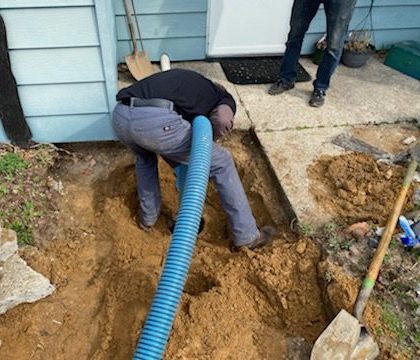
What are the warning signs you need septic repair?
The most common warning signs are slow drains, sewage odors indoors or in the yard, gurgling pipes, pooling water or unusually lush green grass over the drain field, and sewage backups. Any of these means you should call for an inspection before a small issue becomes a costly failure.
Septic trouble rarely appears overnight. Early signs like one slow drain or a faint odor are easy to ignore, but they often point to a developing problem in the tank or drain field.
If you notice backups in multiple fixtures at once, standing water near the field, or smells that won't go away, call us right away at (989) 205-6017. Catching problems early almost always means a simpler, less expensive repair.
- Slow drains or multiple fixtures backing up at once
- Sewage odors inside the home or over the yard
- Gurgling toilets and drains
- Pooling water or soggy ground near the drain field
- Bright, lush grass growing over the field
- Sewage backing up into the lowest drains
What are the most common septic repairs?
Common septic repairs include replacing cracked or missing baffles and tees, sealing or repairing a cracked tank, replacing broken lids and risers, clearing or repairing sewer lines, fixing failed pumps and floats, and restoring or replacing a clogged drain field. We handle each with honest, upfront pricing.
Many issues trace back to normal wear, root intrusion, or a tank that went too long between pump-outs. Some repairs are quick fixes; others require excavation and component replacement.
Whatever the problem, we diagnose first and explain your options clearly before any work begins, so you understand the cause and the cost with no hidden fees.
How do you diagnose a septic problem?
We start with a full inspection: checking tank levels, baffles, lids and risers, testing pumps and floats, and evaluating the drain field. We often pump the tank to see inside clearly and may camera the sewer line. This tells us the true cause so we fix the problem, not just the symptom.
A proper diagnosis matters. Pumping a tank that's backing up may bring temporary relief, but if the real issue is a clogged line or a failing drain field, the problem returns fast.
Our inspection pinpoints exactly what's wrong, so you don't pay for repairs you don't need.
Common septic problems, causes and fixes
Most septic failures come from a handful of causes: overdue pumping, root intrusion, worn components, or soil saturation in the drain field. The table below maps common problems to their likely cause and the typical fix so you know what to expect before we arrive.
Use this as a general guide. Your actual repair depends on what our inspection finds on site.
| Problem | Likely cause | Typical fix |
|---|---|---|
| Slow drains throughout the house | Full tank or clogged outlet | Pump tank, clear or replace baffle |
| Sewage backup into the home | Blocked or broken sewer line | Clear, repair or replace the line |
| Pooling water over drain field | Saturated or clogged field | Drain field service or replacement |
| Strong odors in the yard | Cracked tank or failed seal | Seal or repair tank, replace lid |
| Gurgling pipes | Venting issue or partial blockage | Clear line, inspect venting |
| Pump not running | Failed pump or float switch | Replace pump or float |
Do you offer emergency septic repair?
Yes. Acme Sewer provides 24/7 emergency septic repair across the Thumb and Great Lakes Bay Region. If you have raw sewage backing up, overflowing fixtures, or standing waste in the yard, call (989) 205-6017 any time. We respond quickly to protect your home, family and property.
A septic emergency is a health hazard and can cause serious property damage. Don't wait until morning if sewage is backing up.
Stop using water, keep people and pets away from any pooling waste, and call us right away. We serve Caro, Vassar, Saginaw, Bay City, Midland, Freeland and surrounding communities day and night.
How can you prevent future septic repairs?
Regular maintenance prevents most repairs. Pump your tank every 3 to 5 years, keep heavy vehicles off the drain field, avoid flushing grease, wipes and chemicals, conserve water, and schedule periodic inspections. Preventive care costs far less than emergency repairs or a full system replacement.
Most expensive septic failures start as small, preventable issues. Routine pumping removes the solids that otherwise clog your outlet and drain field.
Ask us about a maintenance schedule that fits your household size and tank. A little upkeep keeps your system running for decades.
- Pump every 3 to 5 years based on household size
- Keep vehicles and heavy equipment off the field
- Never flush grease, wipes, or harsh chemicals
- Fix leaky fixtures and spread out water use
- Schedule regular inspections
Frequently Asked Questions
How do I know if my septic tank or my drain field is the problem?
Can a cracked septic tank be repaired or does it need replacing?
How long does a septic repair take?
Why does my septic keep backing up after being pumped?
Is sewage backing up a septic emergency?
Do you service septic systems in my area?
Will I know the cost before you start the repair?
Trusted Septic Resources
Homeowner guidance from authoritative sources on septic system care, maintenance, and Michigan regulations: