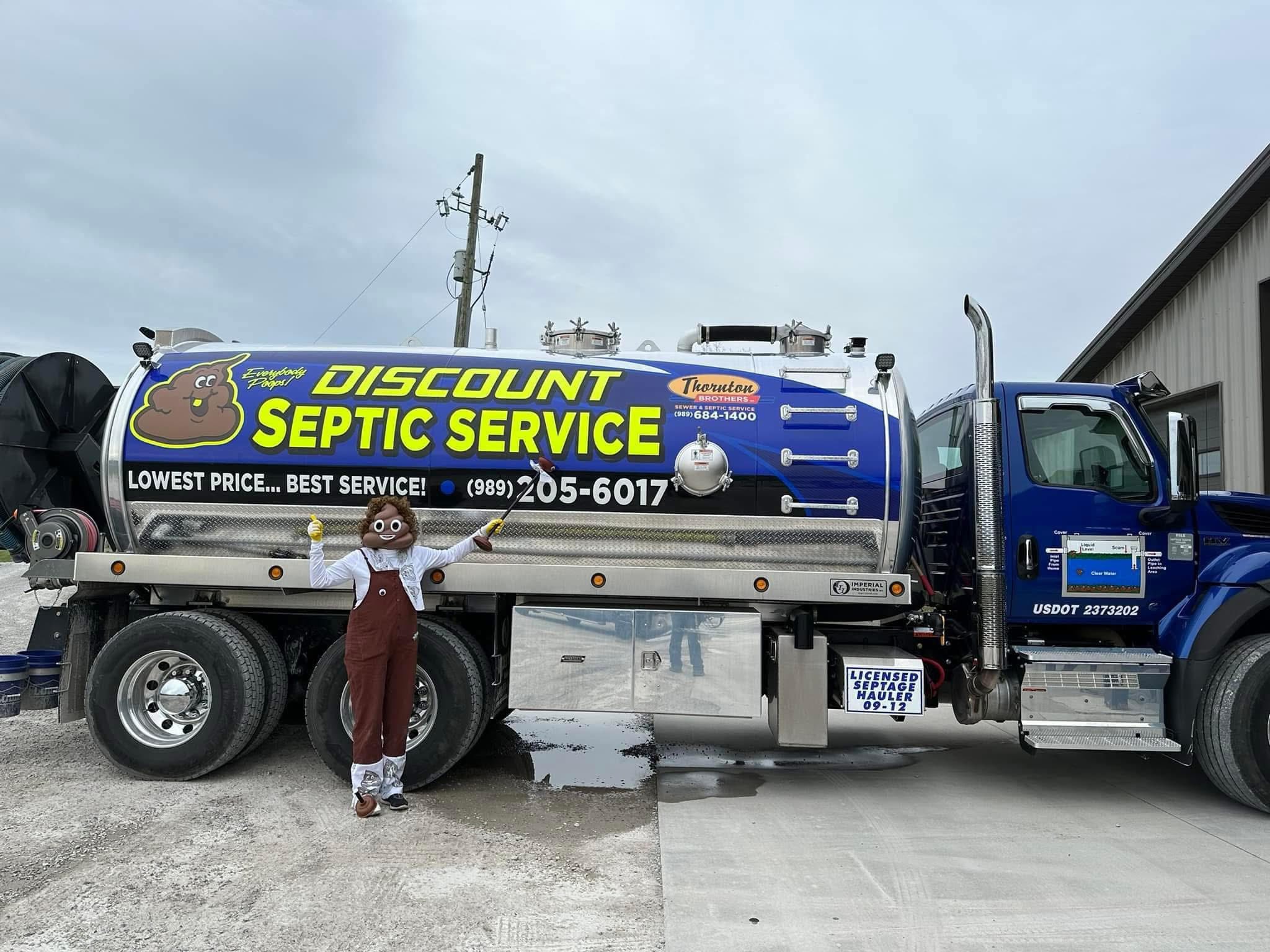
What Determines Your Septic Pumping Price?
The main drivers are tank size, time since the last service, lid accessibility, the volume of solids and sludge, and travel distance within the Thumb and Great Lakes Bay Region. Larger, fuller, or harder-to-reach tanks take more time and labor, which affects the final cost.
Every septic system is a little different, so an honest quote accounts for the real conditions at your property. A 1,000-gallon tank pumped on schedule is a straightforward job, while a neglected or oversized tank takes more time and equipment.
As a family-owned, fully licensed and insured Michigan company, we explain exactly what goes into your price before we start. You will never see surprise add-ons or vague service fees.
- Tank size (residential tanks typically run 1,000 to 1,500 gallons)
- Years since the last pump-out
- Depth and accessibility of the tank lid or risers
- Amount of accumulated sludge and scum
- Travel distance to your community in Mid-Michigan
- Condition of the tank, baffles, and surrounding area
How Does Tank Size Change the Cost?
Larger tanks hold more waste, so they take longer to pump and haul for disposal. A standard 1,000 to 1,500-gallon residential tank is routine, while commercial or oversized tanks require more capacity and time, which increases cost compared with a smaller household system.
Most Michigan homes have a 1,000 to 1,500-gallon tank sized to the number of bedrooms. Commercial properties, large households, and some older systems may have bigger tanks that hold substantially more.
Because disposal is charged by volume and handled responsibly at approved sites, a bigger tank naturally costs more to empty than a compact one.
Why Does Pumping Frequency Affect the Price?
Tanks pumped on the recommended every 3 to 5 year schedule are easier and faster to service. When a tank goes years past due, compacted sludge and heavy solids require extra time, water, and effort to break up and remove, which can raise the cost.
Staying on a regular schedule keeps each visit quick, usually a 20 to 60 minute pump-out, and protects your drain field from expensive damage.
Letting a tank overfill risks backups, clogged baffles, and field failure, all of which cost far more than routine pumping. Regular service is the most affordable way to protect your system.
Does Tank Access Add to the Cost?
Yes. If the lid is buried deep, hard to locate, or far from the driveway, crews spend extra time digging and running hose. Installed risers that bring the lid to grade make each future pump faster and more affordable over the life of the system.
Accessibility is one of the most overlooked cost factors. A lid buried a foot or more underground must be uncovered by hand before work begins.
If you do not know where your tank or lid is, let us know when you call. We can locate it and discuss whether risers make sense for easier future service.
Septic Pumping Cost Factors at a Glance
This table shows the most common factors and how each one influences your final price. Use it to understand your quote and spot ways to keep future service affordable, such as staying on schedule and improving tank access.
| Factor | Effect on Cost |
|---|---|
| Tank size (1,000-1,500 gal typical) | Larger tanks hold more waste and cost more to pump and haul |
| Time since last pump (3-5 yr ideal) | Overdue tanks have compacted sludge that takes longer to remove |
| Lid depth and access | Buried or distant lids add digging and hose time |
| Sludge and scum volume | Heavier buildup requires more time and disposal capacity |
| Travel distance in Mid-Michigan | Farther rural locations add drive time |
| Tank and baffle condition | Damaged components may call for added repair or cleaning |
| Emergency vs scheduled | 24/7 emergency calls are prioritized for urgent response |
How Can I Keep Septic Costs Down?
Pump on the recommended every 3 to 5 year schedule, install risers for easy lid access, conserve water, and keep grease, wipes, and chemicals out of your drains. Catching problems early through routine inspections prevents costly drain field and sewer line repairs down the road.
The single best way to control cost is routine maintenance. A scheduled pump-out is far cheaper than an emergency backup or a failed drain field.
Watch for early warning signs like slow drains, sewage odors, gurgling pipes, pooling water, or unusually lush grass over the field. Call us at the first sign so small issues stay small.
- Stick to a 3 to 5 year pumping schedule
- Add risers so the lid stays easy to reach
- Spread out laundry and heavy water use
- Never flush wipes, grease, or harsh chemicals
- Schedule periodic inspections to catch issues early
Why Choose Acme Sewer for Honest Pricing?
Acme Sewer is a family-owned, fully licensed and insured Michigan company serving Caro, Vassar, Saginaw, Bay City, Midland, Freeland, and the surrounding Thumb. We offer clear, upfront pricing with no hidden fees, 24/7 emergency service, and environmentally responsible disposal.
Our rural Thumb roots mean we treat neighbors the way we would want to be treated: with straight answers and dependable work.
Call us for a transparent quote based on your system and property. We will walk you through the factors above so you know exactly what you are paying for.
Frequently Asked Questions
Do you provide upfront pricing for septic pumping?
How often should I pump my septic tank?
How big is a typical residential septic tank?
How long does a septic pump-out take?
What makes septic pumping cost more than expected?
What are the warning signs I need pumping soon?
Do you offer emergency septic service?
What areas do you serve?
Trusted Septic Resources
Homeowner guidance from authoritative sources on septic system care, maintenance, and Michigan regulations: