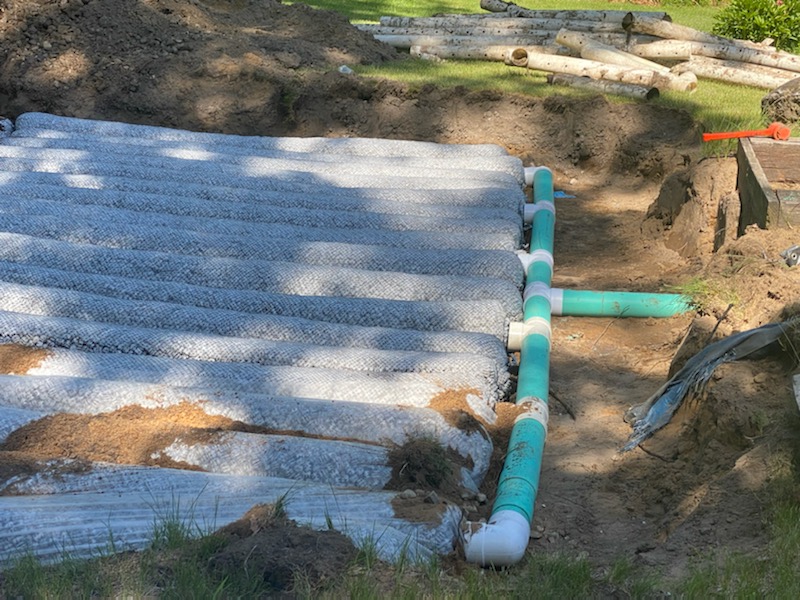
What is a septic drain field and how does it work?
A drain field, or leach field, is a network of perforated pipes in gravel-filled trenches that disperse liquid wastewater from your septic tank into the soil. The soil naturally filters out remaining bacteria and nutrients, returning clean water to the groundwater and completing the septic treatment cycle.
After solids settle in your septic tank, the remaining liquid (effluent) flows out to the drain field. There it trickles through pipes, spreads across gravel, and percolates down through the soil.
The soil does the final cleaning. That is why a healthy, unsaturated drain field is essential to a working septic system here in the Thumb and Great Lakes Bay Region.
- Perforated distribution pipes carry effluent across the field
- Gravel trenches spread the flow evenly
- Soil filters bacteria and nutrients naturally
- Treated water rejoins the groundwater
What are the signs of a failing drain field?
The most common signs of a failing drain field are slow drains throughout the house, sewage odors indoors or outside, pooling water or soggy ground over the field, unusually lush green grass above the pipes, and gurgling sounds in drains or toilets. Any of these means you should call right away.
Drain field problems rarely fix themselves. Catching them early often means a simple service instead of a full replacement.
If you notice sewage backing up into the lowest drains in your home, treat it as an emergency and call us at (989) 205-6017.
- Slow drains in multiple fixtures
- Foul odors near the tank or field
- Standing water or spongy soil over the field
- Bright, lush grass growing over the drain lines
- Gurgling toilets and drains
- Sewage backups in the house
How can I maintain my drain field and extend its life?
Protect your drain field by pumping your septic tank every 3 to 5 years, conserving water, keeping roots and heavy vehicles off the field, and diverting roof and surface runoff away from it. Regular inspections catch small issues before they flood the soil and cause permanent failure.
Most drain field failures trace back to a neglected tank. When solids overflow into the field, they clog the soil and gravel permanently.
Acme Sewer can set a sensible pumping and inspection schedule for your household so your field keeps draining for years.
- Pump the septic tank every 3 to 5 years
- Spread out laundry and spread water use through the week
- Keep vehicles, livestock, and structures off the field
- Plant only grass over the field, never trees or shrubs
- Route gutters and downspouts away from the field
Drain field dos and don'ts
The simplest way to protect your drain field is to keep water, solids, and weight off it. Pump your tank on schedule and send only wastewater down the drain. Avoid parking, paving, planting trees, or flushing grease, chemicals, and wipes that clog the soil and kill helpful bacteria.
| Do | Don't |
|---|---|
| Pump your tank every 3 to 5 years | Flush wipes, grease, or chemicals |
| Keep the field as grass-covered lawn | Plant trees or shrubs over the lines |
| Divert rainwater away from the field | Let downspouts drain onto it |
| Spread out water use | Overload the system in one day |
| Mark the field location | Drive or park vehicles on it |
| Schedule regular inspections | Ignore slow drains or odors |
Can a failing drain field be repaired or does it need replacing?
It depends on the cause. Many drain fields can be restored with jetting, clog removal, or pipe repair when caught early. A field saturated for years or crushed by roots or compaction may need partial or full replacement. We inspect first and give you clear, honest options with no hidden fees.
We never recommend a replacement you do not need. Our team diagnoses the real problem, from a clogged distribution box to failed soil, before quoting any work.
If replacement is the right call, we handle excavation and installation with environmentally responsible disposal throughout the Thumb and central Michigan.
Why choose Acme Sewer for drain field service in Mid-Michigan?
Acme Sewer is a family-owned, fully licensed and insured septic company based in Caro, serving the Thumb and Great Lakes Bay Region. We offer 24/7 emergency service, straightforward pricing with no hidden fees, environmentally responsible disposal, and the dependable service that comes from real rural roots.
- Family-owned with rural Thumb roots
- Fully licensed and insured in Michigan
- 24/7 emergency drain field help
- Clear, upfront pricing, no surprises
- Serving Caro, Vassar, Saginaw, Bay City, Midland, and Freeland
Frequently Asked Questions
How long does a septic drain field last?
What causes a drain field to fail?
Can I plant grass over my drain field?
Is standing water over my drain field an emergency?
How often should I pump my tank to protect the drain field?
Can you fix a clogged drain field without replacing it?
What areas do you serve for drain field service?
Trusted Septic Resources
Homeowner guidance from authoritative sources on septic system care, maintenance, and Michigan regulations: