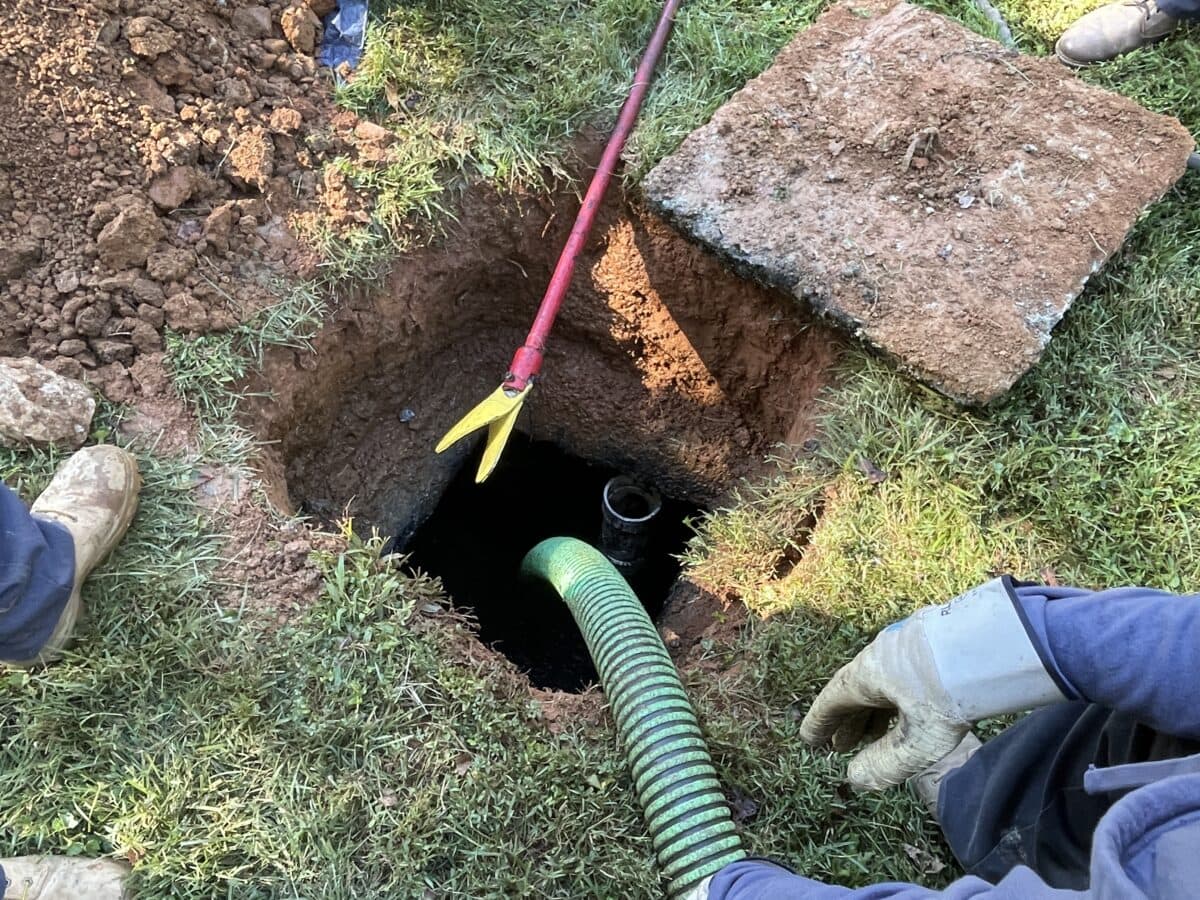
What is septic tank cleaning?
Septic tank cleaning is the complete removal of everything inside your tank: the floating scum layer, the liquid effluent, and the heavy sludge settled on the bottom. Unlike a quick pump-out, true cleaning clears the full contents so your system restarts fresh and your drain field is shielded from overflow.
Over time, solids separate into layers. Grease and lighter material float to the top as scum, while heavier waste sinks and compacts into sludge. The liquid middle layer is what normally flows out to your drain field.
When sludge and scum go unmanaged, they crowd the tank and push solids into the field, where they clog soil and cause failure. Cleaning resets that balance.
- Removes scum, liquid, and bottom sludge
- Protects the drain field from solids
- Restores full working tank capacity
- Gives us a clear view to inspect for issues
Pumping vs. cleaning: what's the difference?
Pumping removes the liquid and some floating solids, while cleaning removes everything, including the compacted sludge on the tank floor. Both have their place, but cleaning is the more thorough service and is what keeps stubborn buildup from migrating into your drain field over the years.
Many homeowners use the terms interchangeably, and in routine maintenance the difference is small. The key distinction is how completely the bottom sludge is removed.
| Factor | Pumping | Cleaning |
|---|---|---|
| What's removed | Liquid and floating solids | Scum, liquid, and bottom sludge |
| Bottom sludge | Partially left behind | Fully removed |
| Typical goal | Routine maintenance | Deep reset and buildup removal |
| Drain field protection | Good | Best |
| Recommended for | On-schedule service | Heavy sludge or overdue tanks |
Why does sludge removal matter?
Sludge removal matters because compacted solids never break down on their own. As the sludge layer grows, it steals tank capacity and forces solids out toward your drain field, where they clog the soil. A clogged field is the most expensive part of a septic system to repair or replace.
A residential tank typically holds 1,000 to 1,500 gallons, but that capacity shrinks as sludge accumulates. Less working volume means wastewater spends less time settling, so more solids escape with every flush.
Removing sludge on schedule is the single most effective way to extend the life of your entire system and avoid emergency repairs.
- Prevents costly drain field clogs and failure
- Restores settling time for incoming wastewater
- Reduces backups, odors, and slow drains
- Extends the overall life of your system
When should you schedule septic cleaning?
Most households should have their septic tank cleaned every three to five years, though larger families or smaller tanks may need service sooner. The best time to schedule is before warning signs appear, but if you already notice trouble, call right away to avoid a backup.
Your ideal interval depends on tank size, household size, and water use. We can recommend a schedule based on your specific system during service.
Scheduling proactively is always cheaper and cleaner than reacting to an emergency overflow.
- Slow drains or gurgling fixtures
- Sewage odors indoors or near the tank
- Pooling water or soggy ground over the drain field
- Unusually lush, green grass above the field
- It has been more than three to five years since service
What happens during a septic cleaning visit?
During a cleaning visit, our crew locates and opens the tank, then uses a vacuum truck to remove the scum, liquid, and sludge. A typical pump-out takes 20 to 60 minutes. We inspect the tank and baffles, answer your questions, and haul the waste away for environmentally responsible disposal.
Access is everything. If your lids or risers are easy to reach, the visit goes faster. We can advise on risers if your tank is buried deep.
Because we have the tank open and empty, it is the ideal moment to catch cracks, root intrusion, or baffle damage before they become emergencies.
Frequently Asked Questions
How often should a septic tank be cleaned?
What is the difference between septic pumping and cleaning?
How long does septic tank cleaning take?
What are the signs my septic tank needs cleaning?
What does septic cleaning cost?
Can I clean my septic tank myself?
What areas do you serve for septic cleaning?
Will cleaning my tank protect my drain field?
Trusted Septic Resources
Homeowner guidance from authoritative sources on septic system care, maintenance, and Michigan regulations: